Have you ever received a message with TMB 📱 and wondered what it means? In most casual conversations, TMB means “Text Me Back.” People use this short texting abbreviation when they want someone to reply to a message. You may see TMB in texting, DMs, group chats, or social media messages when someone wants a quick response.
Understanding TMB meaning in text 💬 is easy when you look at the full conversation. The sender’s tone, context, and relationship with you can affect how the message feels. In this guide, you’ll learn what TMB means in texting, what TMB stands for, how people use it, its other meanings, and how to respond naturally.
Quick Answer: What Does TMB Mean in Texting? 📱
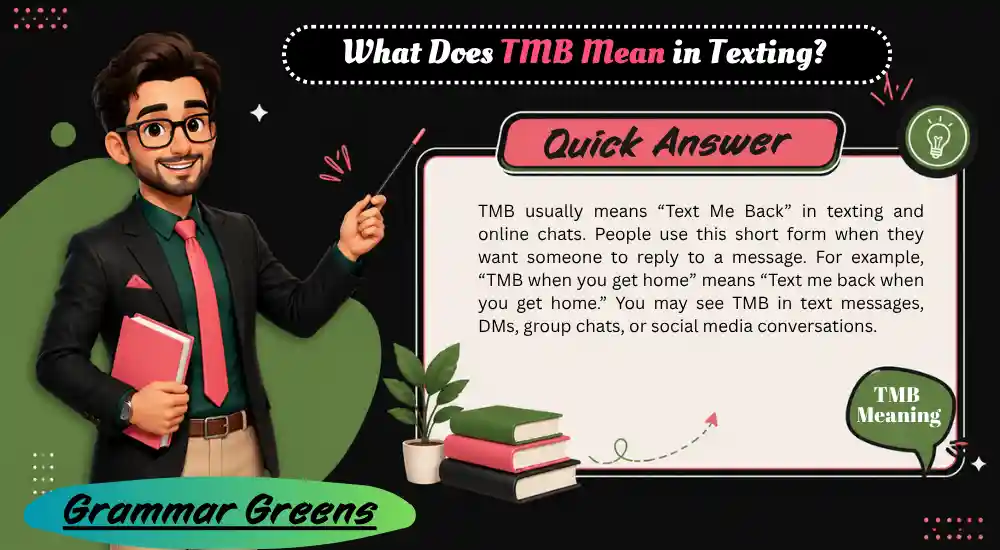
TMB usually means “Text Me Back” in texting and online chats. People use this short form when they want someone to reply to a message. For example, “TMB when you get home” means “Text me back when you get home.” You may see TMB in text messages, DMs, group chats, or social media conversations.
The exact TMB meaning in text can sometimes change with the context. However, Text Me Back remains the most common meaning in everyday English texting. If someone sends you “TMB,” they usually want you to respond when you can. The phrase feels casual and works best in friendly or informal conversations.
TL;DR — TMB Meaning at a Glance ⚡
- TMB usually means Text Me Back.
- People use it to ask someone to reply.
- It works mainly in casual texting and online chats.
- The tone can feel friendly, urgent, playful, or direct.
- The surrounding context helps explain the intended meaning.
- TMB can have other meanings, such as Take Me Back or Trust Me Bro.
- You can reply with “Sure,” “I will,” or a similar natural response.
- Avoid TMB in formal or professional communication.
You Might Also Like That: WYD Meaning
What Does TMB Stand For?
TMB stands for “Text Me Back.” It works as a common texting abbreviation that saves time when people communicate through phones or online platforms. Instead of typing the full phrase, someone can simply write “TMB.” This makes the message shorter while keeping the main idea clear.
Breaking Down TMB
The letters in TMB represent three simple words: T = Text, M = Me, and B = Back. Together, they form Text Me Back, which asks another person to send a reply. For example, “TMB later” means “Text me back later.” This simple breakdown makes the TMB full form easy to remember and understand.
How Is TMB Used in Text Messages?
People use TMB in texting when they expect a response from someone. A person may send it after asking a question, sharing important news, or ending a conversation temporarily. It can also remind someone to reply when they become free. Because TMB sounds short and casual, people usually use it with friends, family, partners, or other people they know well.
The meaning stays simple in most situations: “Please text me back.” For example, “I have something to tell you. TMB when you’re free” asks the receiver to respond later. The abbreviation can sound more urgent when the sender adds words such as “ASAP” or uses strong punctuation.
TMB Meaning in Different Texting Contexts
The TMB meaning in texting usually stays the same, but the feeling behind it can change. A friend might use TMB as a simple reminder, while a partner might use it in a more personal way. Someone who needs an urgent answer may also use TMB to encourage a faster response.
| Context | Example | Possible Tone |
| Friends | “TMB when you’re free.” | 😊 Friendly |
| Family | “TMB when you get home.” | 💬 Caring |
| Urgent | “TMB ASAP.” | ⚡ Urgent |
| Romantic | “TMB ❤️” | 💕 Affectionate |
| Work chat | “TMB when you can.” | Neutral |
TMB Texting Examples 💬
Real examples make the TMB text meaning easier to understand. Imagine that a friend sends, “Hey, I need your opinion. TMB when you get a chance.” The person simply wants you to reply when you have time. Another example could be, “TMB ASAP, something happened,” which shows that the sender wants a quick response.
Here are a few more examples:
- “TMB when you reach home.” → Text me back when you reach home.
- “TMB later 😊” → Text me back later.
- “Please TMB.” → Please text me back.
- “TMB ASAP!” → Text me back as soon as possible.
Does TMB Sound Rude, Friendly, or Flirty?
TMB does not automatically sound rude or flirty. The sender’s words, relationship, and situation determine the tone. A friend may use it in a friendly way, while someone who feels ignored may make it sound impatient. A romantic partner may also use TMB with affectionate words or emojis.
You Might Also Like That: Ion Meaning
The surrounding message provides the strongest clue. “TMB when you’re free 😊” sounds friendly, while “TMB NOW!” sounds urgent or demanding. Similarly, “TMB ❤️” may sound affectionate. So, when you see TMB, read the complete message before deciding what the sender means emotionally.
How Punctuation and Emojis Change the Tone
Punctuation and emojis can change how TMB feels. “TMB.” can sound direct and neutral, while “TMB!” may show more urgency. “TMB!!!” can suggest strong emotion or impatience. On the other hand, “TMB 😊” creates a softer and friendlier feeling. A heart emoji can make the message feel more personal or romantic. These small details do not change the basic TMB meaning, but they can change the way the receiver interprets the message.
Where Is TMB Commonly Used?
People commonly use TMB in text messages, but the abbreviation can also appear across many social platforms. You may find it in Instagram DMs, Snapchat chats, TikTok conversations, WhatsApp messages, Messenger, and group chats. People also use short forms like TMB in casual online communities where quick communication matters.
The platform can sometimes provide a clue about the intended meaning. For example, “TMB” in a normal private message most likely means Text Me Back. However, a social media conversation could give the abbreviation another meaning, so you should always consider the surrounding words and topic before deciding.
How to Respond When Someone Says TMB
When someone says TMB, you can respond based on your situation. If you can reply immediately, simply answer their question or message. If you are busy, let them know when you can respond. You do not need a special response just because they used the abbreviation.
Some natural replies include:
- “Sure, I will!” 👍
- “Okay, what’s up?” 💬
- “I’ll text you later.”
- “I’m free now. What happened?”
- “Sure, give me a little time.”
A short, natural response usually works best.
Does TMB Have Other Meanings?
Although “Text Me Back” remains the main texting meaning, TMB can represent other phrases in different situations. The intended meaning depends on the conversation, platform, and people involved. You should not assume that every use of TMB means exactly the same thing.
Some less common meanings include Take Me Back, Trust Me Bro, Tag Me Back, and Tweet Me Back. These meanings appear in specific contexts rather than ordinary texting. When you see an unusual use, check the surrounding conversation before deciding what the abbreviation means.
TMB = Take Me Back
Take Me Back can appear in relationship or emotional conversations. Someone might use TMB when they want another person to accept them again or restart a relationship. For example, a message such as “I know I made mistakes. TMB” could mean “Take me back.” This meaning depends heavily on the conversation, so it does not usually replace Text Me Back in everyday texting.
TMB = Trust Me Bro
Trust Me Bro can appear in casual online conversations, memes, or jokes. Someone might use TMB after making a claim and asking another person to believe them. For example, “This game is amazing, TMB” could use TMB as a playful form of “Trust Me Bro.” However, the context must support this meaning because Text Me Back remains far more common in ordinary messages.
You Might Also Like That: ASL Meaning
TMB = Tag Me Back or Other Context-Specific Meanings
On social media, TMB can sometimes refer to Tag Me Back or another platform-specific phrase. Other niche meanings also exist, but they depend on the community or conversation. You should treat these meanings as secondary rather than assuming they represent standard texting slang. When the message involves tagging, social posts, or another clear topic, the context can help you identify the intended expansion.
How Can You Tell Which TMB Meaning Someone Intended?
When you see TMB, look at the complete conversation instead of focusing only on the three letters. First, read the words before and after the abbreviation. Next, consider the platform where the person sent it. Then think about your relationship with the sender and what you discussed earlier.
Use these simple clues:
- Read the full message 🔎
- Check the platform 📱
- Think about the conversation 💬
- Consider your relationship 👥
These clues can help you decide whether TMB means Text Me Back or something less common.
TMB vs. Similar Texting Abbreviations
TMB can look similar to other short texting terms, but each abbreviation has a different meaning. TMB asks someone to send a reply, while other abbreviations may ask someone to contact you, tell you something later, or return to the conversation.
| Abbreviation | Meaning | Main Use |
| TMB | Text Me Back | Asking for a reply |
| HMU | Hit Me Up | Asking someone to contact you |
| BRB | Be Right Back | Saying you will return |
| TTYL | Talk To You Later | Ending a chat temporarily |
| DM | Direct Message | Private online message |
Understanding these differences prevents common texting slang confusion.
When Should You Avoid Using TMB?
TMB is informal, so you should use it mainly in casual communication. Friends, family members, and people you regularly chat with can easily understand it. However, formal situations usually require complete words and a more professional tone.
Avoid TMB in:
- Professional emails 💼
- Job applications
- Academic assignments 📚
- Formal business messages
- Official documents
Instead of writing “TMB,” write “Please reply when you have time” or another complete sentence. This approach keeps your communication clear and professional.
Is TMB Formal or Informal?
TMB is an informal texting abbreviation. People use it because it makes casual communication faster and shorter. It works naturally in texts, DMs, chats, and social media conversations, especially when the sender and receiver already understand casual online language.
You Might Also Like That: What Does IMO Mean
You should not normally use TMB in formal writing. A teacher, manager, customer, or business contact may prefer a complete phrase. In those situations, write “Please text me back,” “Please reply,” or “Please get back to me” instead. Choosing the right form depends on your audience and the setting.
Frequently Asked Questions About TMB
What does TMB mean in texting?
TMB usually means “Text Me Back” in texting. People use it when they want another person to reply to their message. The abbreviation works mainly in casual conversations.
What does TMB stand for?
TMB most commonly stands for “Text Me Back.” However, the abbreviation can have other meanings in specific conversations, so context matters.
What does TMB mean in a text?
In most English text messages, TMB means “Text Me Back.” It asks the receiver to send a reply, either immediately or later.
Is TMB rude?
TMB is not automatically rude. The tone depends on the rest of the message, punctuation, emojis, and relationship between the people.
What does TMB mean on Snapchat or Instagram?
On Snapchat or Instagram, TMB usually means “Text Me Back” when someone asks you to respond. The surrounding conversation can reveal another meaning.
How do I respond to TMB?
You can reply naturally with “Sure, I will,” “Okay, what’s up?” or “I’ll text you later.” Choose a response that fits the situation.
Final Thought 💡
TMB usually means “Text Me Back” and gives people a quick way to ask for a reply. Its simple format makes it popular in casual texts, chats, DMs, and social media conversations. While TMB can have other meanings, the surrounding context usually tells you which meaning the sender intended.
When you see TMB, focus on the complete message, the platform, and the relationship with the sender. That approach will help you understand whether the person simply wants a reply or uses a less common meaning. For everyday English texting, “Text Me Back” remains the meaning you should recognize first.