Situationship meaning can be confusing because the word describes something that feels like a relationship but does not have a clear label. A situationship usually involves romantic feelings ❤️, dating, emotional or physical closeness, or some combination of these, while the people involved have not clearly defined their relationship or commitment.
In simple terms, a situationship is more than friendship but less clearly defined than an official relationship. You may spend time together, text often, go on dates, or act like a couple, yet still feel unsure about what you are to each other. Understanding what a situationship means can help you recognize the difference between casual dating, a talking stage, and a committed relationship.
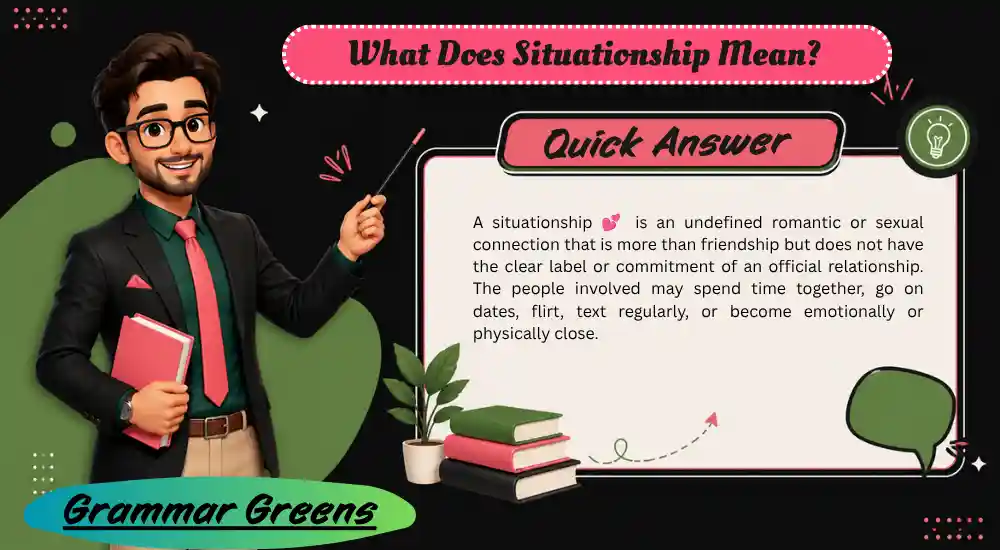
Quick Answer: What Does Situationship Mean?
A situationship 💕 is an undefined romantic or sexual connection that is more than friendship but does not have the clear label or commitment of an official relationship. The people involved may spend time together, go on dates, flirt, text regularly, or become emotionally or physically close.
The main feature is uncertainty. You may like each other and behave like a couple, but you have not clearly agreed on what the relationship is. Commitment, exclusivity, expectations, and future plans may remain unclear. In simple words, a situationship means being romantically connected without clearly defining the relationship.
TL;DR: Situationship Meaning in Simple Words
- 💕 A situationship is more than friendship but less defined than a relationship.
- 🏷️ It usually does not have a clear relationship label.
- 💬 Both people may text, date, flirt, or spend lots of time together.
- 🤷 Commitment and expectations may remain unclear.
- 🔒 Exclusivity may or may not exist.
- ❤️ One or both people can develop romantic feelings.
- 🔮 The future of the connection may feel uncertain.
- 📱 People often use “situationship” in texting and social media conversations.
- 🔄 A situationship can sometimes develop into a committed relationship, but it does not automatically do so.
You Might Also Like That: Gyatt Meaning
What Is a Situationship?
A situationship is a romantic or sexual relationship that does not have a clearly agreed label. You might go on dates, talk every day, become intimate, or share strong feelings with someone without calling each other boyfriend, girlfriend, partner, or another official term.
The word combines “situation” and “relationship” and describes a kind of relationship that sits in between friendship and commitment. Unlike a clear relationship, a situationship may leave important questions unanswered. You may not know whether you are exclusive, where the connection is going, or what each person expects from it.
Situationship Meaning in Simple Words
Think of a situationship as “we are together, but we are not officially together.” You might enjoy spending time with someone and feel emotionally connected to them, but neither person has clearly defined the relationship.
For example, imagine two people who meet several times a week, text throughout the day, go on dates, and become physically close. When someone asks if they are a couple, neither person knows what to say. That uncertainty is a common part of a situationship relationship.
What Does Situationship Mean in Texting?
In texting 📱, situationship usually describes an undefined romantic connection. Someone might text, “I think we’re in a situationship,” when they spend a lot of time with another person but have never officially discussed their relationship.
People may also use the term when talking about mixed signals, unclear commitment, or dating without a label. For example, “We’re more than friends, but we’re not dating officially” captures the common meaning. On social media, people often use “situationship” as modern dating slang for a relationship that feels real but remains unclear.
What Are the Common Signs of a Situationship?
A situationship can look different for different people, but several signs often appear. The biggest sign is uncertainty about the relationship status. You may feel close to someone without knowing how they describe you to others.
Other signs include unclear commitment, mixed expectations, uncertain exclusivity, and no clear discussion about the future. You may act like a couple in private but avoid relationship labels in public. These signs do not automatically mean the connection is unhealthy. They simply show that the relationship has not been clearly defined.
You Act Like a Couple Without a Label
You may ❤️ act like a couple without actually calling yourselves one. You spend time together, go on dates, text regularly, celebrate special moments, or support each other emotionally. However, neither person has clearly said that you are officially in a relationship.
This can create a confusing space between dating and commitment. One person might see the connection as casual, while the other may already view it as something serious. Without an honest conversation, both people can have completely different ideas about what the situationship means.
Your Relationship Status Is Unclear
Another common sign is an unclear relationship status 🏷️. If someone asks, “What are you two?” you may struggle to give a simple answer. You might say you are dating, talking, seeing each other, or simply spending time together.
This uncertainty can continue for weeks or months when neither person wants to define the connection. A situationship does not always involve a lack of feelings. Instead, the main issue often involves lack of clarity about the label, expectations, or level of commitment.
Commitment and Expectations Are Not Defined
In many situationships, commitment 🤝 and expectations remain unspoken. You may not know whether you can date other people, how often you should communicate, or whether you can expect emotional support from the other person.
The problem is not necessarily that the connection lacks care. The issue is that both people may expect different things. One person may want a committed relationship, while the other may prefer casual dating. Clear communication can help both people understand where they stand.
You Are Unsure About the Future
A situationship often creates uncertainty about the future 🔮. You may enjoy what you have now but have no idea whether the connection will become a committed relationship.
You might avoid asking about the future because you fear changing the connection. However, uncertainty can become stressful when your feelings grow. A simple conversation about expectations can make things clearer. The future does not have to be planned immediately, but both people should understand what they currently want from the relationship.
Situationship Examples in Real Life
A common situationship example involves two people who regularly meet for dinner, watch movies together, text every day, and have romantic or physical feelings for each other. However, they never call themselves a couple or discuss exclusivity.
Another example involves two people who started casually dating but became emotionally close over time. They behave like partners but avoid discussing commitment. These examples show why a situationship can feel confusing: the connection is real, but its definition is unclear.
Situationship Examples in Text Messages
The word situationship often appears in casual conversations and text messages. Someone might say, “We’re not officially dating, but we’re definitely more than friends,” or “I don’t know what to call this situationship.”
Another example is: “We’ve been talking for months, but we still haven’t defined what we are.” A friend might reply, “Sounds like a situationship.” These examples show how people use the word to describe an undefined romantic connection rather than a specific type of official relationship.
Situationship vs Relationship
The main difference between a situationship and a relationship ❤️ is clarity. A committed relationship usually has an agreed label, clearer expectations, and a shared understanding of commitment. A situationship may include many of the same activities but lacks that clear definition.
| Situationship | Relationship |
| Usually undefined | Clearly defined |
| Label may be missing | Label is usually agreed upon |
| Commitment may be unclear | Commitment is generally clearer |
| Expectations may differ | Expectations are usually discussed |
| Future may be uncertain | Future expectations are often clearer |
Situationship vs Dating
Dating can involve getting to know someone romantically with the possibility of developing a relationship. A situationship usually describes a connection that has become more established but still remains undefined.
For example, two people going on their first few dates may simply be dating. If they continue seeing each other, become emotionally or physically close, and still avoid discussing what they are, people may describe the connection as a situationship. The terms can overlap, so everyday usage may differ from person to person.
Situationship vs Friends With Benefits
A friends-with-benefits (FWB) arrangement usually combines friendship with sexual activity without a committed romantic relationship. A situationship can involve sex, but it can also involve romantic feelings, dating, emotional closeness, or regular companionship.
The key difference is that FWB often emphasizes the friendship and physical side of the connection, while a situationship can involve a wider mix of romantic and emotional behavior. Neither term guarantees the same boundaries or expectations, so the people involved need to communicate clearly.
Situationship vs Talking Stage
The talking stage 💬 usually describes an early period when two people are getting to know each other romantically. They may text, flirt, go on dates, and decide whether they want to develop a relationship.
A situationship can develop after this stage when the connection continues but remains undefined. However, these terms do not have strict rules. Some people use “talking stage” for a short early period, while others use it for a longer connection. The main difference is usually the level of development and uncertainty.
Situationship vs Casual Dating
Casual dating usually means seeing someone without a strong expectation of commitment. A situationship can also feel casual, but it often involves a stronger emotional or romantic connection without a clear label.
For example, someone casually dating may openly say they are keeping things casual. Someone in a situationship may have strong feelings ❤️ but still not know what the relationship means. This makes the situationship more about unclear relationship status, while casual dating can be clear about its casual nature.
Why Do Situationships Happen?
Situationships can happen for many reasons. Two people may enjoy each other’s company but want different things from dating. They may avoid labels, feel unsure about commitment, or simply allow the connection to develop without having a serious conversation.
Modern dating can also make relationships less predictable. People may meet through apps, date casually, or maintain connections without deciding what comes next. A situationship can therefore grow naturally when both people enjoy the connection but do not define it.
Can a Situationship Become a Relationship?
Yes, a situationship can become a relationship ❤️ when both people want the same thing and communicate openly about it. A conversation can clarify feelings, commitment, exclusivity, and future expectations.
However, a situationship does not automatically lead to a committed relationship. One person may want commitment while the other prefers to keep things casual. The important point is to understand what each person wants instead of assuming the connection will eventually change. Clear communication helps both people make informed choices about the relationship.
How Long Do Situationships Usually Last?
There is no fixed amount of time that a situationship lasts. Some may continue for a few weeks, while others can continue for months or longer. The length often depends on the people involved and whether they eventually discuss their expectations.
A longer situationship does not automatically become a relationship. Time alone does not create commitment. If both people remain comfortable with an undefined connection, it may continue. If their needs change, they may decide to define the relationship, continue casually, or end the connection.
Can a Situationship Be Healthy?
A situationship is not automatically bad or unhealthy. It can work when both people understand the arrangement, communicate honestly, and agree on important boundaries and expectations.
Problems can appear when one person wants commitment while the other wants something casual, or when neither person understands the relationship clearly. Honesty 🤝 matters more than the label itself. Both people should understand whether the connection involves exclusivity, emotional support, physical intimacy, or plans for the future.
How to Define a Situationship With Someone
If you want more clarity, start with a calm conversation. You can ask questions such as, “How do you see this relationship?”, “Are we dating exclusively?” or “What are you looking for right now?”
You do not need to force an immediate label. The goal is to understand each person’s expectations 💬. Discussing commitment, boundaries, exclusivity, and future plans can help you decide whether the connection should remain casual or develop into something more defined.
Common Misunderstandings About Situationships
One common misunderstanding is that every situationship involves casual sex or a lack of feelings. That is not always true. A situationship can include strong emotional feelings, romance, physical intimacy, or genuine care.
Another misunderstanding is that every situationship eventually becomes a relationship. There is no guarantee. The term mainly describes an undefined relationship, not a guaranteed step toward commitment. People use the word differently, so context matters when deciding exactly what a particular situationship means.
Where Did the Word “Situationship” Come From?
The word “situationship” combines “situation” with “relationship.” It developed as a way to describe romantic connections that do not fit neatly into traditional relationship labels.
The term became more visible as modern dating language expanded through social media, dating apps, and online conversations. Dictionary sources now recognize it as a common informal relationship term. Its popularity reflects the need for language that describes connections that fall somewhere between friendship, dating, and a committed relationship.
How Is “Situationship” Used in a Sentence?
People usually use situationship as a noun when describing an undefined romantic connection. Here are a few natural examples:
- “We are not officially dating; we are in a situationship.”
- “I don’t know where this situationship is going.”
- “They have been in a situationship for several months.”
- “She wants to turn their situationship into a relationship.”
- “Our situationship became confusing when feelings got stronger.”
These examples show how the term works naturally in everyday conversations, texting, and social media.
Situationship Meaning FAQs
Is a situationship a real relationship?
A situationship is a real connection, but people usually use the term when the relationship lacks a clear label or commitment. It can include dating, romance, emotional closeness, physical intimacy, or several of these at once. Whether people consider it a relationship depends on how they define and discuss their connection.
Does a situationship mean you are dating?
Not necessarily. People in a situationship may go on dates 💕, but dating can also happen without a situationship. The main difference involves clarity. If two people openly describe themselves as casually dating, the relationship may simply be casual dating. A situationship usually involves more uncertainty about what the connection actually is.
Is a situationship the same as friends with benefits?
No. A friends-with-benefits arrangement usually centers on friendship and sexual activity without a committed romantic relationship. A situationship can include sex, but it may also involve romance, dating, emotional intimacy, or stronger romantic feelings. The terms can overlap, but they do not always describe the same type of connection.
Can you be exclusive in a situationship?
Yes, two people can agree to exclusivity 🔒 while still using the term situationship. A situationship does not have one fixed set of rules. Some people date only each other, while others remain free to see other people. The important part is whether both people clearly understand and agree on the boundaries.
What is the difference between a situationship and a relationship?
The biggest difference is definition and commitment. A relationship usually has a clearer label, expectations, and understanding between the people involved. A situationship usually leaves some of these things uncertain. Two people in a situationship may act like a couple, but they have not clearly established what their relationship means or where it is going.
Final Thought
The simplest situationship meaning 💕 is an undefined romantic or sexual connection that sits somewhere between friendship, dating, and a committed relationship. It can involve real feelings, regular communication, dates, intimacy, and emotional closeness while still lacking a clear label.
The most important part is clarity. A situationship can mean different things to different people, so communication matters when expectations start to differ. Understanding the term can help you describe your connection more accurately and recognize the difference between a situationship, casual dating, a talking stage, and an official relationship.