
TY meaning is simple: TY stands for “thank you.” People commonly use this short abbreviation in texting, chat, social media, and online messages when they want to show appreciation without typing the full phrase. You may see TY in a quick reply, a group chat, a direct message, or a comment.
If you searched “what does TY mean?” or “what does TY stand for?”, you’re in the right place. In this guide, you’ll learn how people use TY in texting and chat, whether it sounds polite or rude, when it works best, and how it compares with other common expressions such as TYSM, TYVM, and THX.
Quick Answer
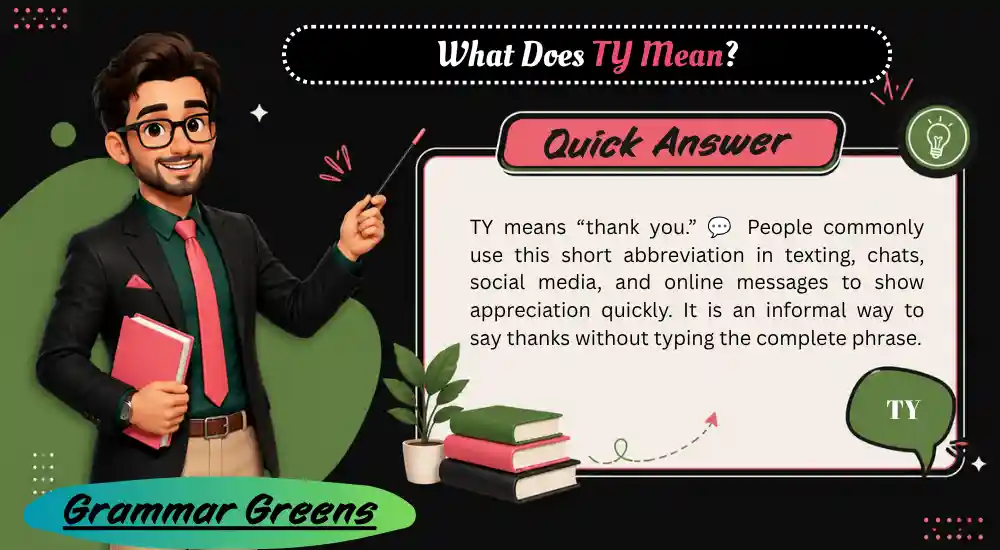
TY means “thank you.” 💬 People commonly use this short abbreviation in texting, chats, social media, and online messages to show appreciation quickly. It is an informal way to say thanks without typing the complete phrase.
If someone sends you “TY,” they are usually thanking you for something you said, shared, or did. 😊 The meaning is simple, but the tone can depend on the conversation. For formal emails or professional messages, writing “thank you” is usually a better choice.
TL;DR
- 💬 TY means “thank you.”
- 📱 It is commonly used in texting and online chats.
- 😊 TY usually shows appreciation or gratitude.
- 💻 You may see it on social media, messaging apps, and gaming chats.
- 👍 TY is informal, so it works best in casual conversations.
- ✉️ Use “thank you” instead of TY in formal or professional communication.
- 🔤 Similar forms include TYSM, TYVM, and THX.
You Might Also Like That:
What Does TY Mean?
TY means “thank you.” It is a common text abbreviation that people use to show appreciation in a quick and simple way. You can see TY in text messages, online chats, social media posts, comments, and direct messages. Instead of typing the full phrase, people use these two letters to save time.
The TY meaning stays the same in most casual conversations. When someone sends you “TY,” they usually want to say thanks or show that they appreciate something you did. For example, a friend may write, “TY for helping me!” This makes TY a simple form of internet slang used in everyday digital communication.
What Does TY Mean in Texting and Chat?
In texting and chat, TY usually means “thank you.” People use it when they want to thank someone without writing a longer message. You may find TY in private texts, group chats, online communities, or quick replies. Its short form makes conversations faster, especially when people already understand the context.
The phrase can also appear as “ty,” “TY,” or “Ty.” The capitalization does not normally change the meaning. For example, “ty for the info” and “TY for the info” both express appreciation. This TY meaning in text makes it one of the easiest abbreviations to understand in casual online conversations.
How Do You Use TY in a Text?
You can use TY whenever you want to thank someone in an informal conversation. It works well when a person helps you, gives you useful information, sends something you asked for, or does you a favor. You can also add other words or emojis to make your message sound warmer. 😊
Here are a few natural examples:
- 💬 “TY for helping me!”
- 🙌 “TY so much!”
- 😊 “TY, I really appreciate it.”
- 📩 “TY for sending the details.”
- 👍 “Got it, TY!”
These examples show how people normally use the TY abbreviation in everyday messages.
Is TY Formal or Informal?
TY is informal, so it works best in casual conversations. You can use it with friends, family members, classmates, and people you regularly chat with online. It also fits well in social media messages, gaming chats, and other relaxed digital conversations.
For formal or professional communication, writing “thank you” usually makes a better impression. For example, use “Thank you for your time” in a business email instead of “TY for your time.” Using the complete phrase sounds more respectful and professional. ⭐ Choosing between TY and “thank you” mainly depends on the person, situation, and tone.
You Might Also Like That:
Is TY Rude or Polite?
TY is generally polite, because it expresses gratitude. The abbreviation itself does not normally sound rude. However, the way someone writes it can affect how the message feels. A simple “TY!” may sound friendly and positive, while a very short “ty” could feel less warm in certain situations.
Context also matters. Adding words or emojis can make the message feel more personal. For example, “TY so much! 😊” sounds warmer than simply “ty.” If you are unsure about the tone, use “thank you” instead. It gives your message a clearer and more respectful feeling.
TY vs. TYSM, TYVM, and THX
People use several short forms to express thanks in online conversations. Although they have similar meanings, each one can give your message a slightly different feeling. TY is the simplest option, while TYSM and TYVM add stronger emphasis.
| Short Form | Meaning | Typical Tone |
| TY | Thank you | Casual |
| TYSM | Thank you so much | Warm and enthusiastic |
| TYVM | Thank you very much | More emphatic |
| THX | Thanks | Casual |
For example, “TY” works for a quick thank-you, while “TYSM!” can show stronger appreciation. These forms are mainly useful in informal digital communication.
You Might Also Like That:
How Do You Respond to TY?
When someone sends you TY, you can reply in several simple ways. Your response can depend on the situation and how well you know the person. In most casual conversations, you do not need a long answer. A short and friendly response works perfectly.
Common replies include:
- 😊 You’re welcome!
- 👍 No problem!
- 🙌 Anytime!
- 💬 Of course!
- ⭐ Happy to help!
- 🙂 My pleasure!
If the conversation feels very casual, you can even respond with an emoji. The important thing is to keep your reply natural and match the tone of the conversation.
What Does TY Mean on Social Media?
On social media, TY usually has the same meaning: “thank you.” People may use it in comments, captions, replies, direct messages, and group conversations. Because social platforms encourage quick communication, short forms such as TY can make replies easier and faster.
You may see TY on platforms such as Instagram, Snapchat, TikTok, WhatsApp, and other messaging services. For example, someone may comment, “TY for sharing this!” or send “TY 😊” in a direct message. The exact platform does not normally change the basic TY meaning.
You Might Also Like That:
Frequently Asked Questions About TY
What does TY stand for?
TY stands for “thank you.” People commonly use it as a short text abbreviation in casual digital communication. You can find it in text messages, chats, social media, comments, and direct messages.
Is TY short for thank you?
Yes. TY is short for “thank you.” It gives people a quick way to express gratitude without typing the full phrase. It works especially well in informal texting and online conversations.
What does TY mean in texting?
In texting, TY means “thank you.” People use it after someone helps them, gives them information, answers a question, or does something helpful. It is a common form of texting slang.
Is TY slang?
TY can be considered internet or texting slang because people use it as a shortened form of “thank you” in casual digital communication. It is widely understood in many online conversations.
Can I use TY in a formal email?
It is better to avoid TY in a formal email. Instead, write “thank you” to keep your message professional and clear. TY fits better in casual messages, chats, and social media conversations.
What does TY mean in chat?
In chat, TY means “thank you.” Someone may use it as a quick reply after receiving help, information, advice, or a favor. Its meaning usually stays clear from the conversation.
Is TY rude?
TY is not normally rude. It usually shows appreciation. However, a very short message can sometimes feel less personal depending on the context. Adding words such as “so much” or a friendly emoji can make it warmer.
Final Takeaway
The most common TY meaning is simple: TY means “thank you.” People use this abbreviation in texting, chat, social media, and other forms of casual online communication. It helps people express gratitude quickly without typing the complete phrase.
💡 Remember: TY works best when you want a short, informal response. For professional emails, business messages, academic communication, or other formal situations, “thank you” remains the safer choice. Understanding the setting and tone will help you choose the right expression and communicate your appreciation clearly.