The question of the meaning of life has followed people for centuries. When someone asks, “What is the meaning of life?”, they may be asking about the purpose of human existence, why we are here, or what makes life worth living. There is no single answer that everyone accepts, because people approach this question through philosophy, religion, spirituality, science, relationships, and personal values.
For some, meaning comes from faith or a higher purpose. For others, it comes from love, family, personal growth, creativity, helping others, or meaningful experiences. Understanding these different perspectives can help us explore not only the meaning of life, but also what gives our own lives a sense of purpose and significance.
Quick Answer
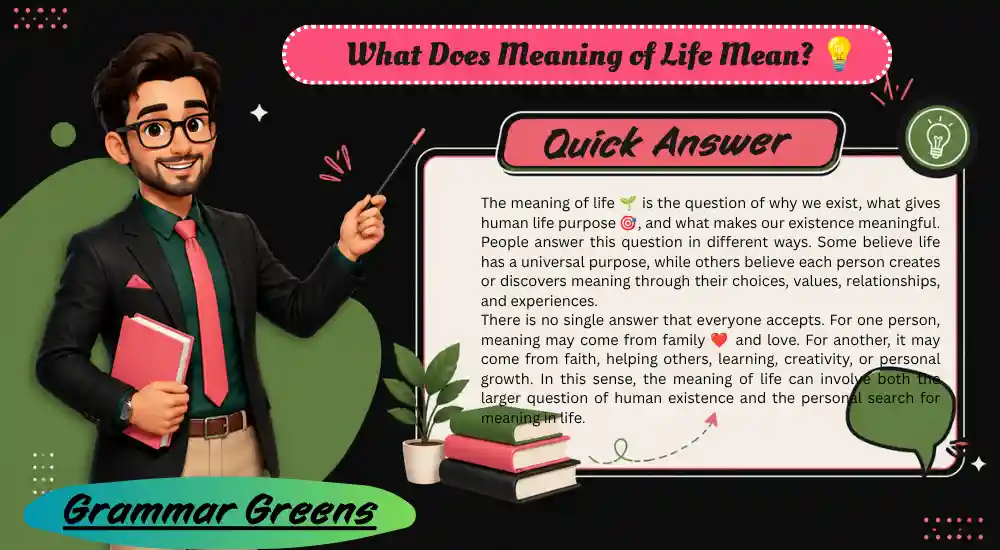
The meaning of life 🌱 is the question of why we exist, what gives human life purpose 🎯, and what makes our existence meaningful. People answer this question in different ways. Some believe life has a universal purpose, while others believe each person creates or discovers meaning through their choices, values, relationships, and experiences.
There is no single answer that everyone accepts. For one person, meaning may come from family ❤️ and love. For another, it may come from faith, helping others, learning, creativity, or personal growth. In this sense, the meaning of life can involve both the larger question of human existence and the personal search for meaning in life.
TL;DR: What Is the Meaning of Life?
- 🌱 Meaning of life: A question about why we exist and what makes existence significant
- 🎯 Purpose of life: What a person believes they are here to do
- ❤️ Meaning in life: The things that make an individual’s life feel valuable and worthwhile
- 🧠 Philosophy: Explores whether life has an objective meaning or purpose
- 🙏 Religion and spirituality: Often connect life’s meaning with God, faith, the soul, or spiritual growth
- 🤝 Personal meaning: Can come from relationships, love, work, creativity, learning, and helping others
- 💭 No single answer: Different people and traditions can understand life’s meaning in different ways
You Might Also Like That: RN Meaning
What Is the Meaning of Life?
The meaning of life 🌱 refers to the deeper question of why humans exist and what gives human existence purpose, value, or significance. When people ask, “What is the meaning of life?” they may really be asking several questions at once: Why are we here? Why do we exist? What is the purpose of human life? These questions have inspired philosophers, religious thinkers, writers, and ordinary people for centuries.
The phrase can also describe a more personal question: What makes my life meaningful? In that sense, meaning may come from love, family, friendship, personal goals, creativity, knowledge, faith, or helping others. The answer can change as a person’s experiences and values change.
What Does “Meaning of Life” Really Mean?
The phrase “meaning of life” 💭 does not have only one definition. It can describe the purpose of human existence, the value of being alive, or the reason life matters. Someone asking this question may want to know whether humans have a purpose that exists beyond individual choices. Another person may simply want to understand what makes life feel worthwhile.
This difference matters because meaning, purpose, and significance are related but not identical. Purpose often describes what you aim to do, while meaning can describe why something matters. The question can therefore be philosophical, spiritual, or deeply personal depending on what the person wants to understand.
Meaning of Life vs Meaning in Life
Meaning of life 🌍 usually asks whether human existence has an overall purpose or significance. It is a broad question about human existence itself. For example, someone may ask whether humanity has a purpose or whether the universe gives our lives a particular role.
Meaning in life ❤️ focuses more on an individual person’s experience. It asks what makes someone’s own life valuable, purposeful, or fulfilling. Family, friendship, love, personal growth, meaningful work, creativity, and helping others can all provide meaning in life. Understanding this difference helps explain why someone can believe there is no universal purpose while still living a deeply meaningful life.
Why Do People Ask About the Meaning of Life?
People often ask about the meaning of life 🤔 because they want to understand their place in the world. Simple curiosity can lead to the question, but major experiences can make it feel more important. A new job, relationship, loss, success, failure, or major change can cause someone to think more deeply about purpose and existence.
People may also ask because they want direction. Questions such as “Why are we here?”, “What are we living for?” and “What makes life worth living?” often appear when someone wants to connect their daily choices with something that matters. The search for meaning can therefore involve both philosophy and everyday life.
What Is the Purpose of Human Existence?
The purpose of human existence 🌍 is one of the biggest questions connected to the meaning of life. Some people believe humans have a purpose that exists independently of personal choices. Others believe people develop their own purpose through their values, decisions, relationships, and goals.
Purpose and meaning do not always mean the same thing. A purpose can describe a goal or direction, while meaning can describe the significance we find in our experiences. A person might have a purpose to care for a family, create something useful, or help a community. Another person may focus on learning or personal growth. These different purposes can still create a meaningful life.
Major Philosophical Views on the Meaning of Life
Philosophers have offered many answers to the question of what is the meaning of life 🧠. Some argue that meaning comes from God or another higher reality. Others argue that meaning can exist naturally through human relationships, values, achievements, or experiences. Some philosophical views even question whether life has any objective meaning at all.
Existentialism
Existentialism 🧠 often focuses on human freedom, choice, responsibility, and the challenge of creating meaning in an uncertain world. Many existentialist thinkers explore the idea that people cannot simply wait for someone else to give their lives purpose. Instead, they must make choices and take responsibility for how they live.
This view makes personal meaning especially important. Your values, decisions, relationships, and commitments can shape the direction of your life. Existentialism also asks difficult questions about freedom, death, responsibility, and the human condition.
Nihilism
Nihilism ⚫ is often associated with the belief that life does not possess inherent or objective meaning, value, or purpose. In discussions about the meaning of existence, nihilism raises an important question: what if there is no universal answer?
This perspective does not automatically tell a person how to live. Instead, it challenges the assumption that meaning must exist independently of human beings. Understanding nihilism can help readers see why philosophers disagree about whether meaning is something we discover or something we create.
Absurdism
Absurdism 🎭 explores the tension between people’s desire for meaning and a world that may not provide a clear, universal answer. The idea is often connected with the question of whether humans can continue living meaningful lives even when they cannot find an ultimate explanation for existence.
From this perspective, people may still choose to live, care, create, love, and experience life despite uncertainty. Absurdism therefore adds another angle to the question of why are we here without requiring a single final answer.
Naturalistic and Other Views
Some naturalistic views 🔬 look for meaning without relying on a supernatural source. Meaning may come from human relationships, conscious experiences, personal goals, knowledge, creativity, or contributions to others. Other approaches argue that meaningfulness can involve objective values even without a traditional religious framework.
These views show why the meaning of life remains an open philosophical question. People can disagree about the ultimate source of meaning while still finding common ground in ideas such as relationships, kindness, growth, curiosity, and contribution.
Religious and Spiritual Perspectives on Life’s Meaning
Many religious and spiritual traditions 🙏 connect the meaning of life with a higher power, moral purpose, spiritual development, or life beyond death. Some traditions teach that human life has a divine purpose, while others focus on spiritual growth, responsibility, compassion, or preparation for an afterlife.
Spiritual views can also describe life as a journey 🌱 rather than simply a period between birth and death. Ideas about the soul, faith, reincarnation, and life after death can shape how people understand existence. Because religious traditions differ, it is more accurate to describe these as different perspectives rather than one universal religious answer.
What Makes a Life Meaningful?
A meaningful life ❤️ does not necessarily depend on fame, wealth, or extraordinary achievements. People often find meaning through ordinary parts of life that connect with what they value. Love, family, friendship, personal growth, creativity, learning, meaningful work, and helping others can all become important sources of meaning.
Meaning can also develop through commitment. When people care deeply about something and invest time and effort in it, that activity may become significant to them. A meaningful life can therefore look very different from one person to another because people have different values, goals, relationships, and experiences.
Can You Create Your Own Meaning in Life?
Some people believe we can create our own meaning 🌱 rather than discover one fixed answer. This approach focuses on personal choice, values, relationships, goals, and responsibility. Instead of asking only, “What is the meaning of life?” a person can also ask, “What do I want my life to stand for?”
Creating meaning does not mean choosing something without thought. It can involve identifying what matters most and building your life around those values. Helping others, raising a family, creating art, learning, serving a community, or pursuing meaningful work can all become parts of a personally meaningful life.
Does Life Have to Have One Universal Meaning?
Life does not necessarily have to have one universal meaning 🌍 for individuals to experience meaning. Some philosophical views search for an objective purpose that applies to everyone, while other views focus on personal or shared human values.
This distinction allows people to approach the question in different ways. One person may believe that meaning comes from a higher purpose, while another may believe people create meaning through their choices. A third person may remain uncertain. The important point is that meaning and purpose can be understood at different levels, from the entire human species to one person’s everyday life.
Can a Meaningful Life Exist Without a Fixed Purpose?
A person can understand their life as meaningful ❤️ without believing that they have a predetermined purpose. Meaning can develop through relationships, commitments, values, experiences, and actions that matter to them. For example, caring for someone, creating something, learning a skill, or helping a community can give life significance without requiring a fixed destiny.
This idea separates meaning from purpose. Purpose often points toward a goal, while meaning can come from the value we place on what we experience and do. Someone may not know exactly where life is going and still build a life around things they consider important.
Is Happiness the Meaning of Life?
Happiness 😊 can make life enjoyable, but meaning and happiness are not exactly the same. A meaningful life can include happiness, but it can also include responsibility, effort, sacrifice, disappointment, and difficult experiences. For example, caring for a family member may sometimes feel demanding while still giving a person a strong sense of purpose.
Meaning can come from doing something that matters even when it does not create immediate pleasure. Love, responsibility, personal growth, contribution, and meaningful relationships can provide lasting significance. This is why defining the purpose of life simply as “being happy” can leave out many important parts of human experience.
How Can You Find Meaning and Purpose in Your Own Life?
Finding meaning in life 🔎 often starts with paying attention to what you genuinely value. Instead of searching for one perfect answer, consider the activities, people, goals, and beliefs that consistently matter to you.
You can begin by:
- ❤️ Building strong relationships
- 🎯 Setting meaningful goals
- 🌱 Investing in personal growth
- 🤝 Helping other people
- 🎨 Exploring creativity
- 📚 Learning something new
- 🧭 Identifying your core values
- 💼 Finding meaning in useful or meaningful work
Your sense of purpose can develop over time. It does not need to remain exactly the same throughout your life.
Frequently Asked Questions
Is there one true meaning of life?
There is no universally accepted answer 🌍 to the question of whether life has one true meaning. Religious, philosophical, and personal perspectives offer different explanations. Some people believe in an objective or divine purpose, while others believe people create meaning through their values, choices, relationships, and experiences.
Why are we here?
“Why are we here?” 🤔 can mean several things. A person may ask about the purpose of human existence, the origin of life, or what makes life worthwhile. Science can investigate questions about how life developed, while philosophy and religion explore questions about purpose, meaning, and significance. Different perspectives provide different answers.
What is the purpose of human life?
The purpose of human life 🎯 depends on the framework someone uses. Religious traditions may connect it with God, faith, or spiritual responsibility. Philosophical views may focus on freedom, values, relationships, knowledge, or personal meaning. Some people believe humans create their own purpose rather than receive one fixed purpose.
Does life have meaning without God?
Some people believe life can have meaning without God 🌱, while others believe meaningful existence requires a divine source. Secular and naturalistic approaches may find meaning through relationships, personal values, creativity, knowledge, contribution, and human flourishing. This remains a philosophical question rather than something with one universally accepted answer.
Can you create your own meaning in life?
Yes, some philosophical perspectives argue that people can create meaning 🌱 through their choices, values, relationships, goals, and commitments. A person might find meaning through family, work, creativity, learning, helping others, or personal growth. Creating meaning does not require everyone to choose the same things.
What makes life meaningful?
A meaningful life ❤️ can involve different things for different people. Common sources include love, family, friendship, community, personal growth, meaningful work, creativity, learning, helping others, and living according to personal values. What matters most is how these experiences connect with what a person considers important.
What is the difference between meaning and purpose?
Purpose 🎯 usually refers to a goal, direction, or reason for doing something. Meaning 💭 refers more broadly to the significance or value something has. A person can have a purpose, such as helping others, and find meaning through that purpose. The two ideas overlap, but they are not identical.
Final Thoughts
The meaning of life 🌱 is not a question with one answer that every person, philosophy, or tradition accepts. It can refer to the purpose of human existence, the significance of being alive, or the things that make an individual’s life meaningful. Philosophical, religious, spiritual, and personal perspectives can all approach the question differently.
For many people, meaning grows through love ❤️, relationships, personal growth, creativity, learning, responsibility, and helping others. You do not have to solve the entire mystery of existence to live a meaningful life. Sometimes, understanding what you value and choosing to live according to those values can provide a meaningful sense of purpose 🎯.